Define the Visual Direction
Share a mood board, brand palette, tile-size target and any original face artwork. We identify the desired front and edge appearance.
Press Enter to search or ESC to close
Four-layer construction gives a Mahjong tile a recognizable edge profile and a carefully controlled sense of depth. FENGZHE works with brands to select the face, decorative, core and backing layers so that the finished tile looks consistent from the front, side and back.
We begin with your preferred dimensions, target weight, color palette and original artwork. Our team reviews how each layer contributes to visibility, contrast and handling before recommending sample construction. The goal is a coordinated American Mahjong set, not simply adding more material.
After the proposed structure is agreed, we review tile-face alignment, bonding appearance, edge polishing, artwork legibility and the packaging needed to protect the finished product.

Every four-layer project begins with a design brief and ends with an approved reference sample. These six stages help clarify technical choices before volume production.
Share a mood board, brand palette, tile-size target and any original face artwork. We identify the desired front and edge appearance.
Discuss a protective face, decorative layer, core color and backing layer. We review feasibility, thickness and handling together.
Check suits, numbers, flowers, jokers and special symbols against the planned tile-face dimensions and artwork method.
Evaluate the visible color bands, alignment, bonding appearance and polishing requirements using representative samples.
Compare actual colors, weight, tactile feel and print or engraving clarity with the approved specification. Record requested revisions.
Finalize tile configuration, quantities, accessories, packing and inspection points before bulk production.
Each layer has a different visual or structural purpose. Actual material order and thickness are confirmed after technical review and sampling; the options below illustrate how a coordinated four-layer design may be planned.
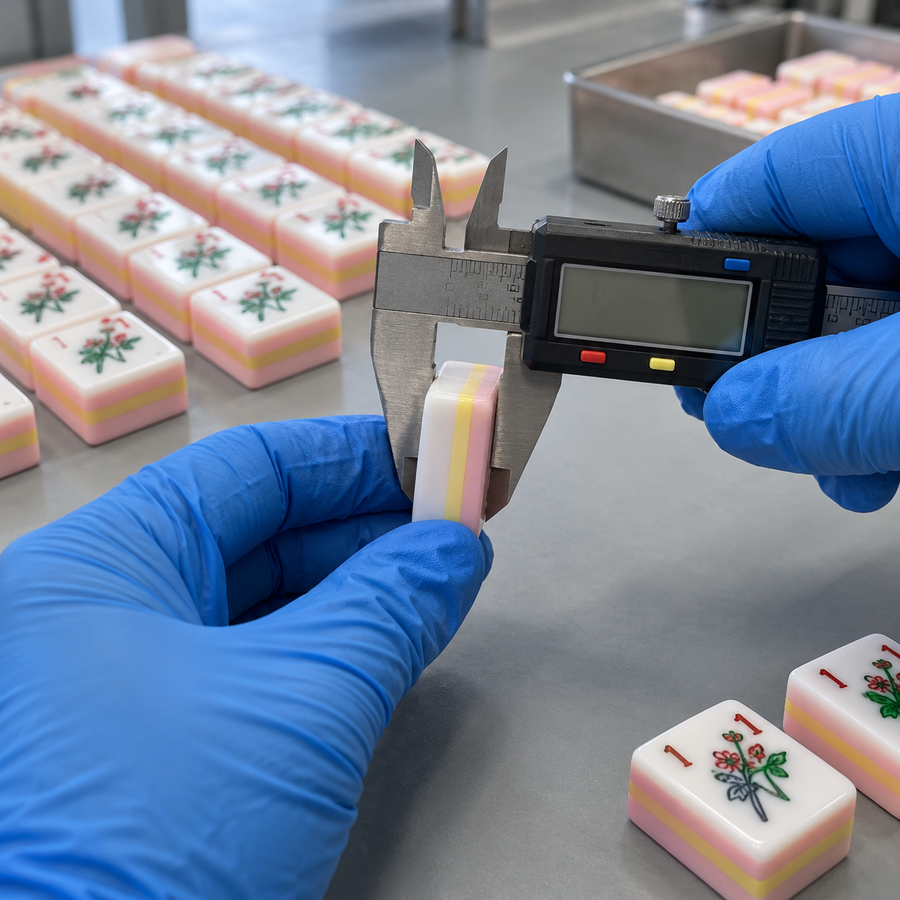
The front-facing surface is selected to support readable tile symbols and a smooth finished appearance. Its suitability depends on the artwork and finish.

A colored, translucent or patterned accent can create depth and a recognizable visual signature along the tile edge.

The central layer contributes body color, perceived thickness and contrast between the decorative face and the backing.

The back layer completes the palette and should look consistent across all tiles, with attention to bonding and edge polishing.
The face graphics, decorative color transitions and visible edge profile should work together. We help brands check artwork clarity and layer combinations against the approved sample rather than relying on digital mockups alone.
Coordinate the face artwork with all four visible material layers, avoiding combinations that reduce legibility.
Explore contrasting or subtle stacked color bands to make the collection recognizable when tiles are standing together.
Review the placement and clarity of suits, flowers and jokers so designs remain aligned with the chosen tile dimensions.
Check actual edge polishing, material transparency and surface finish before approving production artwork.
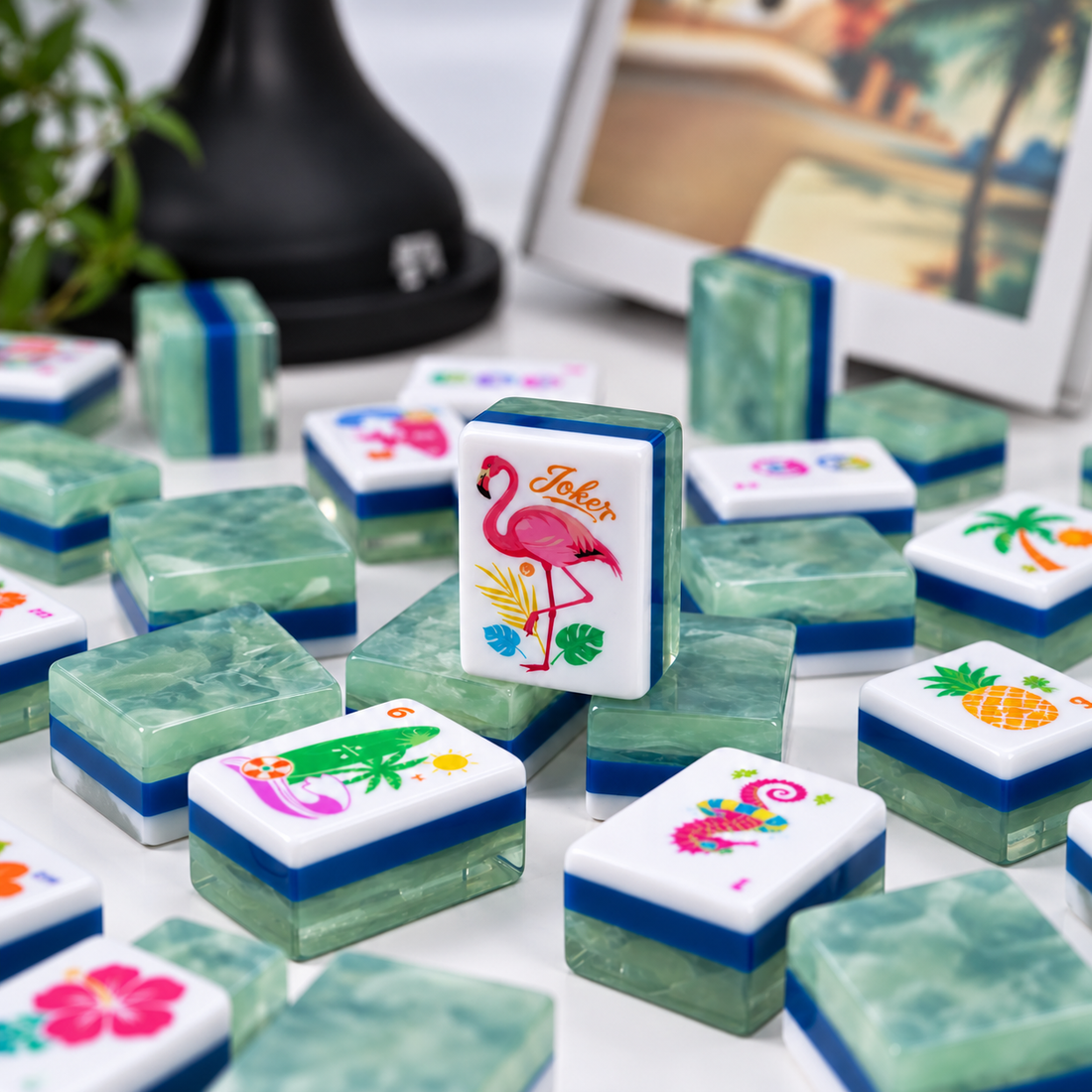

Confirm the approved sequence of all four layers, thickness targets, material references and expected finished tile dimensions.
Compare real samples under suitable lighting. Review the visible color bands, opacity and consistency between tiles.
Verify that each tile face uses the correct design file and that linework, registration and special symbols are readable.
Review bonding appearance, edge transitions, polishing quality and any visible defects on representative samples.
Confirm the required tile count, accessories, protective inserts, labels, carton configuration and delivery destination.
Four layers can create a more distinctive side profile and controlled visual depth than a simpler construction. The value depends on the colors, thickness, material finish and intended product positioning. We help you choose a combination that looks coherent rather than assuming more layers are always better.
Yes, proposed colors can be reviewed individually and as a stack. Please share color references or physical swatches where possible. Transparent and opaque acrylic may appear different under lighting, so a physical sample is important for confirming the final appearance.
We can review sketches, mood boards and original digital files to identify layout, legibility and technical constraints. We discuss which suits, numbers, flowers and jokers need artwork, then establish a proofing process. Any artwork development scope and cost are confirmed for the project.
Layer choice can affect total thickness, weight and edge feel. We review the desired tile dimensions and handling characteristics before proposing the layer structure. The physical sample should be checked for comfort, balance and consistency.
We assess representative samples for layer alignment, visible bonding issues, edge consistency and surface finishing. Any acceptance criteria should be agreed before bulk production. Specific tolerances depend on the approved construction and manufacturing method.
Multiple coordinated colorways may be possible using the same artwork direction. Each colorway should have its own approved material references and sample or documented standard so that the production team does not mix versions.
Sample development can be discussed once the structure, artwork and material options are defined. Sample fees, revisions and timing depend on complexity. We recommend approving the finished tile appearance and the complete set configuration before production release.
Send the tile count and dimensions, proposed four-layer colors, artwork files or references, target quantity, packaging requirements and shipping destination. If some decisions are open, tell us your priorities and we can identify what must be confirmed before pricing.
We can review branded boxes, protective inserts, instruction cards and coordinated accessories. Packaging is planned around the final tile dimensions and set contents so that the product is presented clearly and protected during shipment.
Both depend on layer material availability, sample approval, artwork complexity, quantities and packaging. We provide project-specific terms after reviewing the requirements; no universal minimum quantity or delivery time is assumed.
Share your preferred tile size, color references, original artwork, quantity and destination. We can discuss a four-layer structure, sample requirements and a project-specific quotation.
Discuss Your Four-Layer ProjectShare your preferred four-layer colors, tile size, artwork, order quantity, packaging requirements and destination. After submitting, email your design files separately.


Room 03, 21st Floor, Unit 1, Building 7, Haide Garden
219 Zhongxing North Road, Daya Bay West District
Huizhou, Guangdong 516083, China